Comment From: Scott Neumann Date: January 27, 2025 at 11:19:34 AM EST To: jack martin Subject:RE: Flyways
Hello Jack,
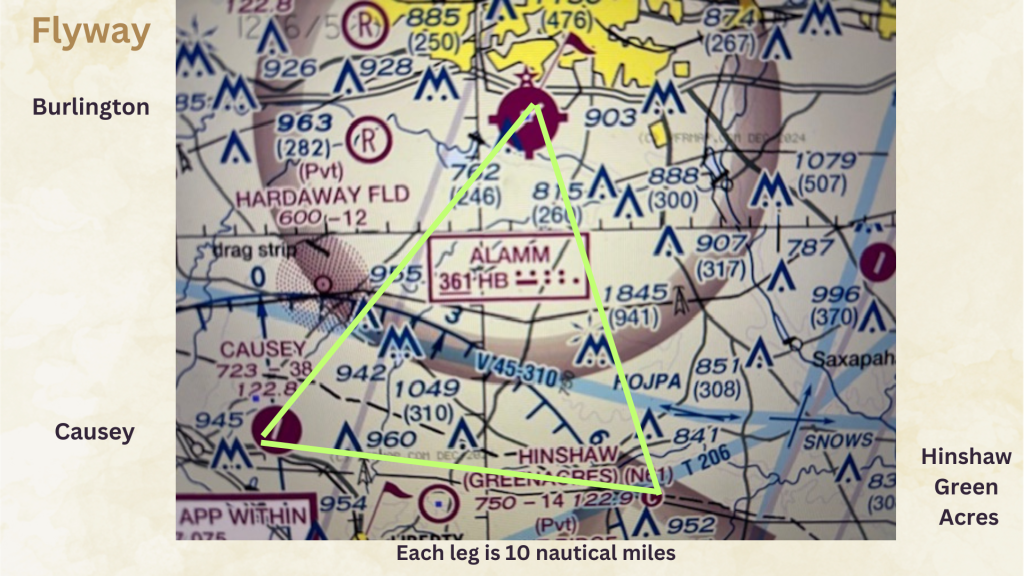
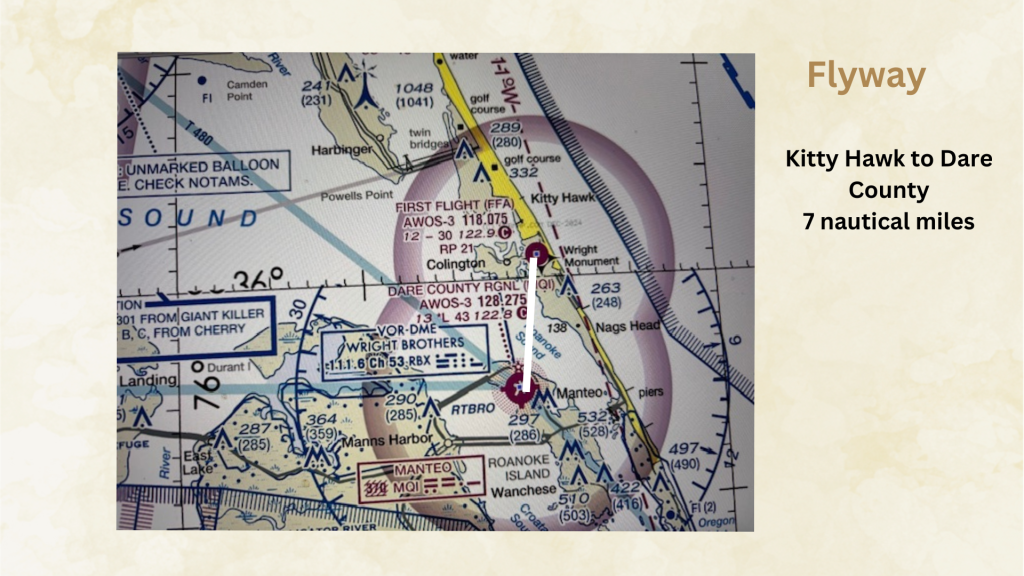
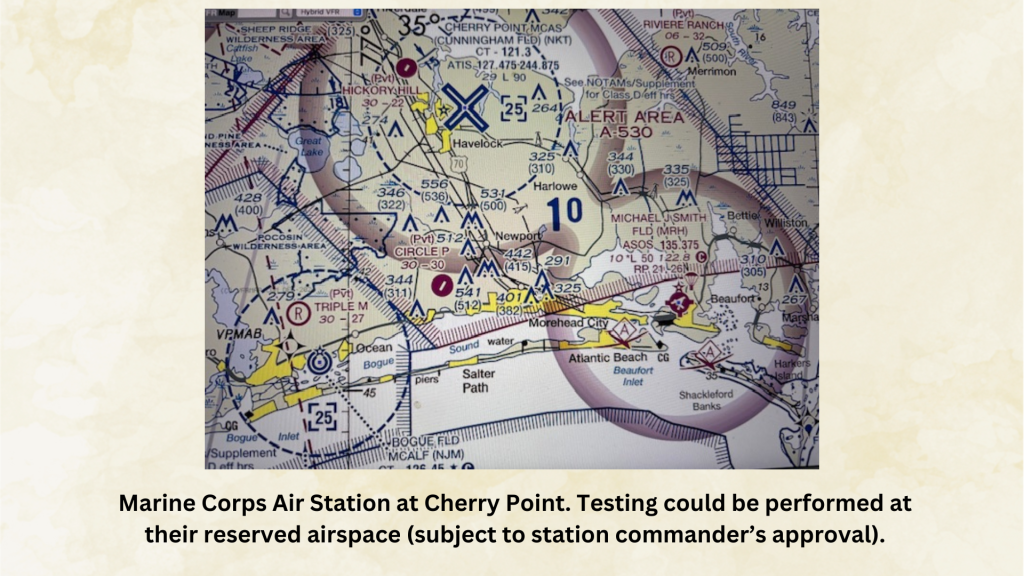
The flyways initiative sounds like an interesting idea. Drones, AAM and electric propulsion are new areas so bringing airspace, facilities, and a technically competent workforce as a test center for the SE part of the country is promising.
Here are some thoughts in no particular order:
North Carolina is a great place with a state government interested in these new technologies. NC DOT worked with the FAA to be the first state with a NEPA evaluation for part 135 drone delivery operations in most of the major metro areas. Although the NEPA programmatic Environmental Assessment (EA) is only for drone package delivery, they have relationships with the FAA that could be built on for the flyways. Might be good to contact NC DOT and shop the idea around.
Since the Civil Air Patrol is a federal government agency, if the flyways are organized under CAP there could be a requirement to do a NEPA evaluation. My wife just retired from the FAA doing UAS NEPA for Flight Standards, and these can take up to a year.
I think it would be good to flesh out the types of operations and testing you have in mind. I could see for example the testing could be a collaborative arrangement between an airport and a university to do test planning, instrumentation, data collection and data analysis. You might also want to include some FAA individual designees (DERs) or an organizational designee (ODA – Organization Designation Authorization) who can make certification finding on behalf of the FAA. That would be a great capability. By the way, the FAA I think has a rulemaking underway to open UAS certification up to DERs and ODAs.
There are already UAS test sites that were set up as part of legislation a few years back. It might be good to look into these and see how your concept would be similar of different from the existing test sites.
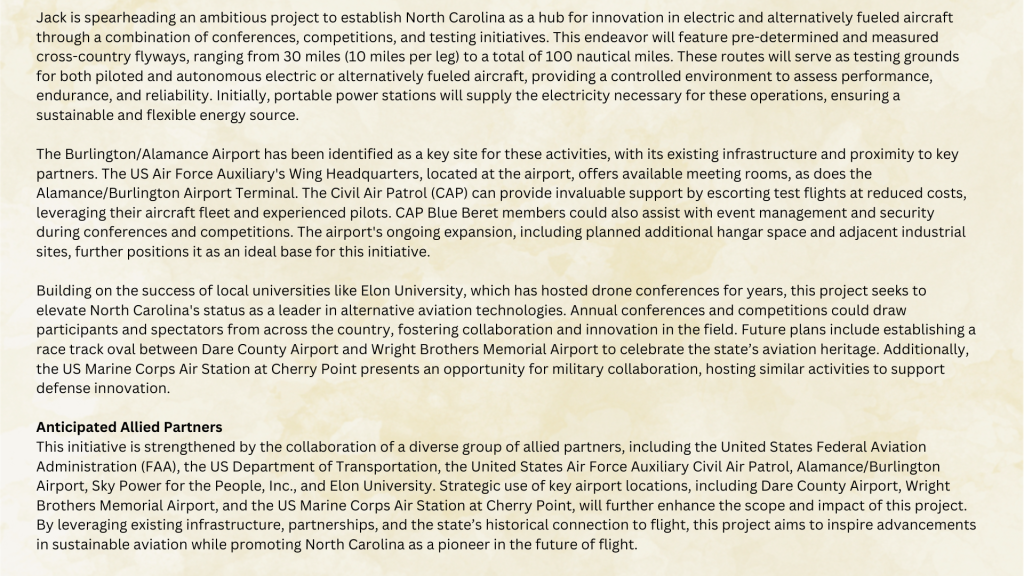
Using the CAP to provide UAS escort for beyond line of site testing is a great idea. In addition to formation training, you would probably need to add a low level checkout since may of the smaller drones are limited to 400 ft AGL. Probably a little lower than most of us fly on a regular basis especially in hilly/mountainous terrain.
Testing comes in a few different flavors – developmental, certification and operational. Each comes with its own instrumentation and data requirements. (Noise testing is another special case required for NEPA and possible certification. If you could get a group that is proficient and has the special equipment to do noise testing the way the FAA requires (not easy) it could be a nice source of income.)
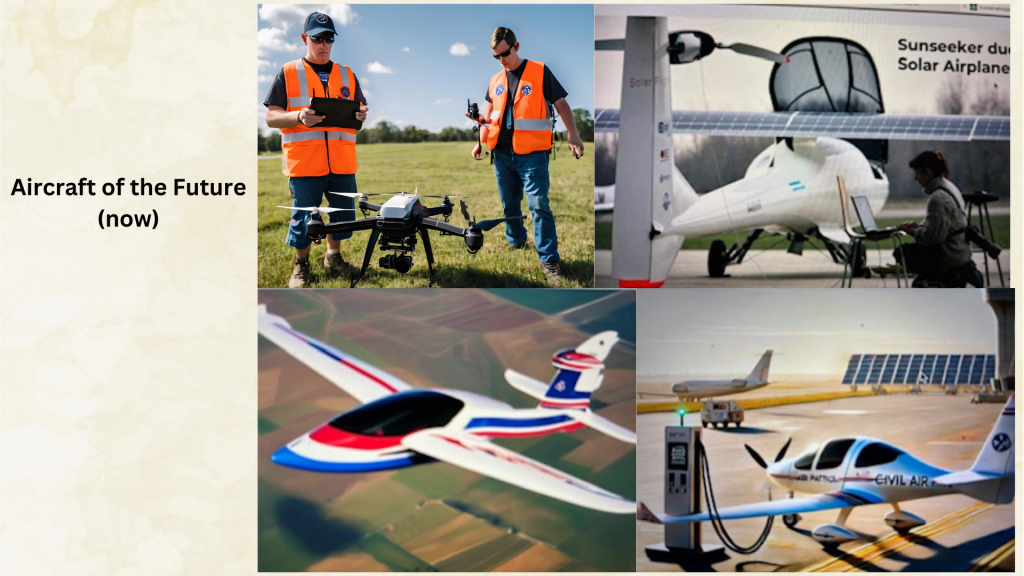
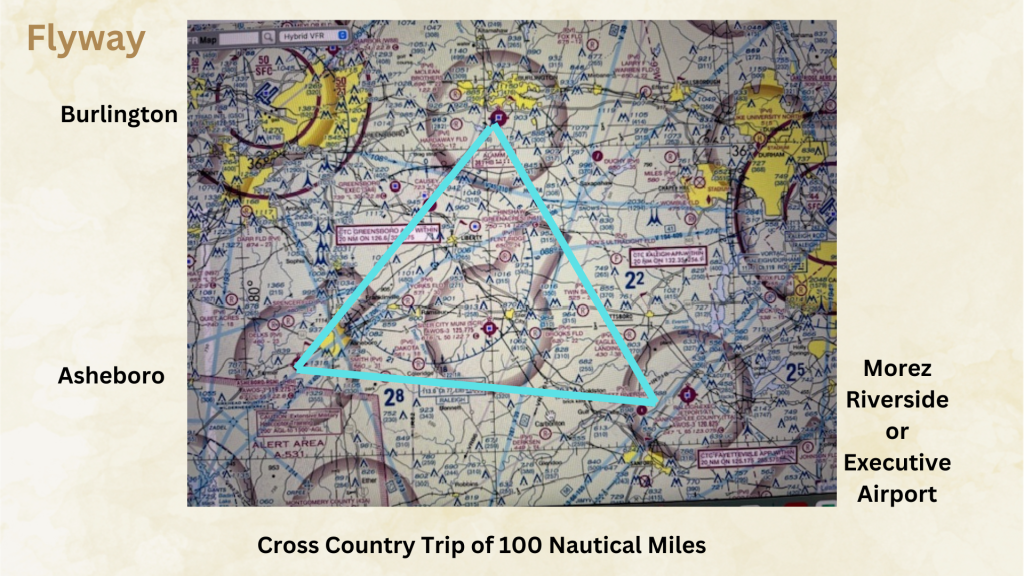
Another great capability would be to have the designated flyways equipped with telemetry stations and relays so that UAS and AAM vehicles under test can be in constant and reliable contact with a control station. Again, this is particularly important for low flying aircraft.
If you haven’t done so already, it might be worthwhile to do some market research with companies who are developing UAS and AAM and see what capabilities they are most interested in.
Again, these are just a few thoughts – thanks for sharing!